Logistics Network Design: Using Spatial Data to Determine Optimal Warehouse and Plant Locations

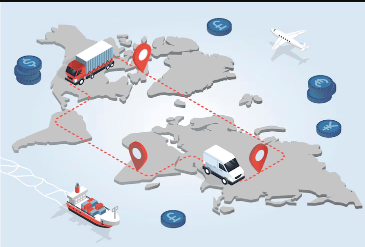
Logistics network design is the discipline of deciding where to place warehouses, plants, cross-docks, and distribution centres so that customer demand is served at the lowest feasible cost while meeting service targets. These decisions have a long-term impact because facilities are expensive to open, expand, or relocate. That is why organisations increasingly use spatial data and quantitative models rather than intuition. Spatial data helps teams understand distance, travel time, demand concentration, risk zones, and infrastructure constraints. For analysts learning how to translate business problems into decision models through business analyst coaching in hyderabad, logistics network design is a strong example because it combines data, optimisation, and practical trade-offs.
Why Location Decisions Need Spatial Thinking
A facility location decision is not just about land cost. It is about the total cost to serve. The same warehouse might look cheap on rent but become expensive once transport cost, lead time, and delivery reliability are considered. Spatial data makes this visible.
Distance and travel time affect freight spend, promised delivery windows, and fuel usage. Demand density matters because serving high-volume zones from far away adds recurring cost. Infrastructure matters because highways, ports, rail heads, and congestion patterns influence both cost and service.


Risk also has a spatial dimension. Flood plains, cyclone zones, political disruption corridors, and supplier concentration clusters can increase operational risk. When you map these factors, network design moves from guesswork to measurable scenarios.
Core Spatial Datasets Used in Network Design
Spatial data can be created internally or sourced from public and commercial datasets. The key is to choose data that directly influences cost and service.
Demand and customer locations
Start with customer ship to points such as pincodes, store locations, dealer points, or regional hubs. Attach demand volume, seasonality, and required service levels. Even if exact addresses are not available, postcode centroids can still be useful.
Supply points and production constraints
Map plants, suppliers, and inbound lanes. Add capacity, production lead times, and material flow constraints. In many industries, inbound supply drives location decisions as much as outbound delivery.
Transport network and travel time
Road distance is not the same as travel time. Include travel time matrices where possible. Congestion data, toll routes, and vehicle restrictions can shift the best location choice.
Cost and policy constraints
Add land and labour cost ranges, tax implications, and regulatory restrictions. Some regions may have incentives, while others may limit heavy vehicle movement or warehouse operating hours.
Analytical Methods to Find Optimal Locations
Network design typically uses a mix of visual exploration and optimisation models. The goal is to select facility locations that balance cost and service under constraints.
Geospatial clustering and heatmaps
Heatmaps show demand concentration. Clustering methods, such as the mean method, can group demand points into service regions, helping you form candidate warehouse zones. This step is useful for narrowing options before running more complex models.
Centre of gravity analysis
A centre of gravity approach computes a weighted location that minimises distance to demand points based on volume. It is fast and easy, but it ignores real road networks and constraints. It is best used as a starting point for candidate generation.
Location allocation optimisation
More advanced models treat the problem as an optimisation task. For example, a p median model minimises total distance or cost given a fixed number of facilities. A capacitated facility location model determines both the number of facilities and which demand points each facility serves, while accounting for capacity and fixed costs.
These models need good inputs. If demand forecasts are wrong or service targets are unclear, the output will still be questionable. That is why the business analyst role is important in defining assumptions and validating data.
See also: How Consultants Provide Objectivity During Business Restructures
Building a Practical Network Design Workflow
A reliable process makes results easier to explain and defend.
Step 1: Define objective and constraints
Clarify whether the priority is minimum cost, improved service time, risk reduction, or a balanced mix. Define constraints such as maximum delivery time, warehouse capacity, minimum utilisation, and budget caps.
Step 2: Clean and geocode data
Standardise location fields, remove duplicates, and geocode customer and facility points. If you do not have address-level precision, use consistent geographic units like postcode or district.
Step 3: Create scenarios
Design is rarely one answer. Run scenarios like one warehouse versus two, adding a cross-dock, changing service promise from 48 hours to 24 hours, or including a new plant. Scenario planning makes stakeholder conversations practical.
Step 4: Validate with stakeholders
Operational teams may know constraints that are not in data, such as driver availability, unloading rules, or local bottlenecks. Incorporate their feedback before finalising recommendations.
Professionals who practise this kind of structured analysis in business analyst coaching in hyderabad often find it easier to communicate model outputs because they can explain assumptions, limitations, and trade-offs clearly.
Common Pitfalls and How to Avoid Them
One common mistake is using straight-line distance instead of road or travel time, which can mislead results. Another is ignoring variability. Seasonal demand spikes may require temporary capacity or flexible fulfilment. A third mistake is treating service level as a vague concept. Define it as measurable metrics, such as on-time delivery percentage, delivery lead time, and order fill rate.
Also, avoid overfitting. If you use too many complex parameters, small data errors can produce large changes in output. Start with a simple model, then add complexity only when it improves decisions.
Conclusion
Logistics network design uses spatial data to convert location decisions into measurable outcomes. By mapping demand, supply, transport networks, and constraints, teams can identify warehouse and plant locations that lower total cost while meeting service targets. The best results come from combining geospatial insight, optimisation modelling, and stakeholder validation. When done well, network design becomes a repeatable decision framework rather than a one-time project.