Key Takeaways:
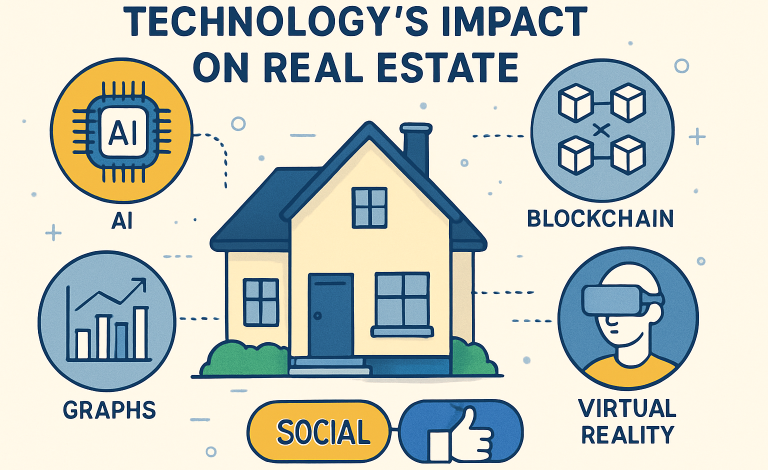
- Artificial Intelligence (AI) is revolutionizing property valuations and market analysis.
- Blockchain technology is enhancing transaction security and enabling fractional ownership.
- Virtual and augmented reality are transforming property tours and client engagement.
- Big data analytics are providing deeper insights into market trends and consumer behavior.
- Online marketplaces and social media are expanding the reach and efficiency of property listings.
Artificial intelligence is increasingly shaping how real estate data is analyzed and interpreted. By processing large volumes of historical sales, neighborhood trends, and economic indicators, AI tools can help generate more consistent property valuations and clearer market insights. These systems reduce human bias, identify patterns that may be overlooked, and adapt quickly to shifting conditions. As a result, professionals and consumers alike gain access to information that supports more informed decision-making across pricing, investment timing, and risk assessment.
Beyond valuations, AI-driven market analysis is influencing how experts interpret local and regional dynamics. Predictive models can highlight emerging demand, forecast price movements, and assess property performance under different scenarios. In practice, insights from technology often complement traditional expertise, such as the perspective offered by West Palm Beach FL real estate expert David Cooke, blending data-driven analysis with on-the-ground knowledge. Together, these approaches reflect a broader shift toward balanced, evidence-based understanding in modern real estate markets.


Blockchain Transactions: Securing Deals and Enabling Fractional Ownership
Security and efficiency have always been priorities in real estate, and blockchain technology now offers solutions on both fronts. Smart contracts, powered by blockchain, automate key elements of transactions, such as title verification, escrow services, and payment handling. This automation significantly shortens closing periods, allowing buyers and sellers to complete transactions in hours rather than weeks. In terms of ownership, blockchain enables fractional investments by dividing property equity into digital shares, facilitating easier trading, liquidity, and diversification.
Leading platforms such as RealT and Propy have made strides in tokenizing real estate and ensuring regulatory compliance within the protocol. These advancements are enabling everyday investors to participate in global real estate markets with a level of liquidity and accessibility previously unattainable.
Virtual Tours: Immersive Experiences for Buyers
Virtual and augmented reality are rapidly transforming how people view and engage with properties. Buyers can now tour homes remotely, exploring every angle and detail through interactive 3D models and augmented floor plans. For individuals relocating or facing time constraints, these technologies greatly enhance convenience and reduce the time spent visiting multiple properties in person.
Enhanced visual content, such as virtual tours and high-resolution images, increases buyer engagement and helps listings stand out in crowded digital marketplaces.
Big Data: Unveiling Market Trends and Consumer Behavior
Big data analytics has ushered in an era in which agents can make smarter, faster decisions based on vast pools of information. By compiling and analyzing data points from multiple sources, agents predict neighborhood growth, anticipate market shifts, and align property recommendations with clients’ unique preferences. Tools powered by big data can detect nuanced patterns and highlight emerging opportunities that would be easy to overlook manually.
With AI-driven personalization, buyers receive tailored purchase suggestions and even home-staging ideas tailored to their lifestyle, budget, and family needs. These insights increase satisfaction and improve the odds of a successful sale, ultimately making the process more buyer-friendly and efficient.
Online Marketplaces: Expanding Reach and Efficiency
Digital platforms like Zillow, Redfin, and Trulia have made home searching more streamlined and transparent than ever. Detailed listings feature high-quality photos, in-depth property data, and often, direct connections to agents and lenders. Buyers benefit from the ability to compare multiple homes side by side, while sellers gain access to much larger and more diverse audiences.
The integration of secure payment systems, transparent negotiation tools, and digital document handling reduces friction at each stage. As real estate becomes more digital, the process becomes less daunting for buyers, sellers, and renters across diverse locations and backgrounds.
Social Media: A New Frontier for Real Estate Marketing
Social media channels have become essential in reaching and engaging new audiences. Real estate agents now use platforms like Instagram, TikTok, and Facebook to showcase listings, share virtual tours, and demonstrate their industry expertise. These platforms allow properties to go viral, generating excitement around unique or high-demand listings and enabling quick feedback.
Beyond advertising, social media strengthens connections within the industry itself, as agents foster relationships with peers, appraisers, and service contractors. Staying active on social media is now critical for agents hoping to reach younger, digitally native buyers and maintain a competitive edge.
Challenges and Considerations in Adopting New Technologies
Adopting these new technologies is not without challenges. The increased reliance on data and automation raises concerns about privacy, accuracy, and fairness. AI-generated listing photos can be manipulated, making it harder for buyers to gauge a property’s true condition. As automated tools become more prevalent, agents must develop new skills to maintain personalized service standards while navigating complex legal and ethical questions related to automation and data privacy.
Additionally, while technology can streamline the process, it also poses the risk of reinforcing biases or excluding buyers and sellers who are less comfortable with digital tools. The industry faces an ongoing challenge to deliver inclusive, transparent, and trustworthy services as digital transformation accelerates.
Future Trends: What’s Next in Real Estate Technology
The combination of blockchain and AI is expected to enhance automation and reliability in real estate, enabling features like instant property valuation and seamless title transfers. As buyer expectations change, AI-driven chatbots, predictive analytics, and virtual tours are becoming standard tools in the industry. Additionally, the rise of remote work is increasing demand for suburban and rural properties. Firms that fail to adapt to these innovations risk falling behind, as clients now expect digital convenience and personalized service. Staying connected with industry professionals and utilizing the right tools will be crucial for success in this tech-driven era of real estate.
Conclusion
Technology is redefining how real estate is analyzed, marketed, and transacted, bringing greater efficiency, transparency, and accessibility to the industry. While innovation continues to accelerate, the most effective outcomes come from balancing advanced tools with human expertise and ethical practices. As digital solutions evolve, real estate professionals and consumers alike stand to benefit from smarter, more informed, and more adaptable market experiences.